The power of Motion Data
Football isn’t just a game—it’s a cultural phenomenon that moves millions. But what if we could measure that movement? T-Systems’ Motion Data does exactly that, analyzing anonymized mobile network data from Deutsche Telekom to uncover how fans travel, where they come from, and who they are. The insights from the 2024/25 Bundesliga season challenge clichés and open new opportunities for clubs, cities, and event organizers.
Home games analysis: local advantage
When it comes to home matches, the data confirms most fans come from the immediate surroundings of the stadium. This matters for traffic planning—extra trains, shuttle buses, and parking management are essential to avoid congestion. Motion Data provides cities with hard numbers to make smarter decisions.
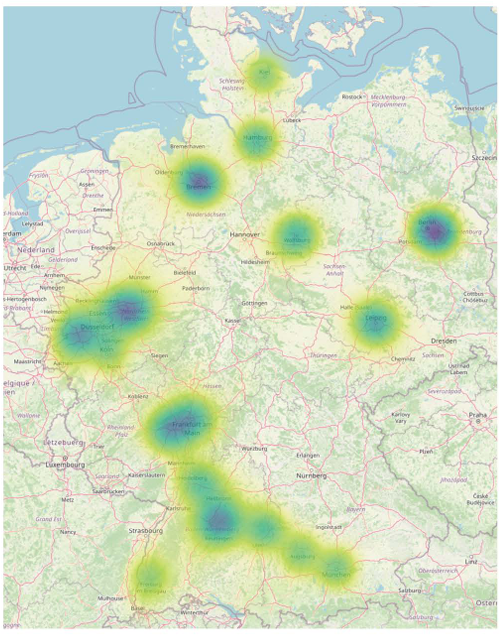
Figure 1: Fan mobility home games
Away games: nationwide vs. local fans
Not all clubs mobilize their supporters in the same way.
Some, like Bayern Munich or Borussia Dortmund, inspire nationwide travel—creating atmospheres that feel almost like home matches. Others, such as SC Freiburg or RB Leipzig, rely on strongly regional fan movements.
Age structure: 50 in the stands
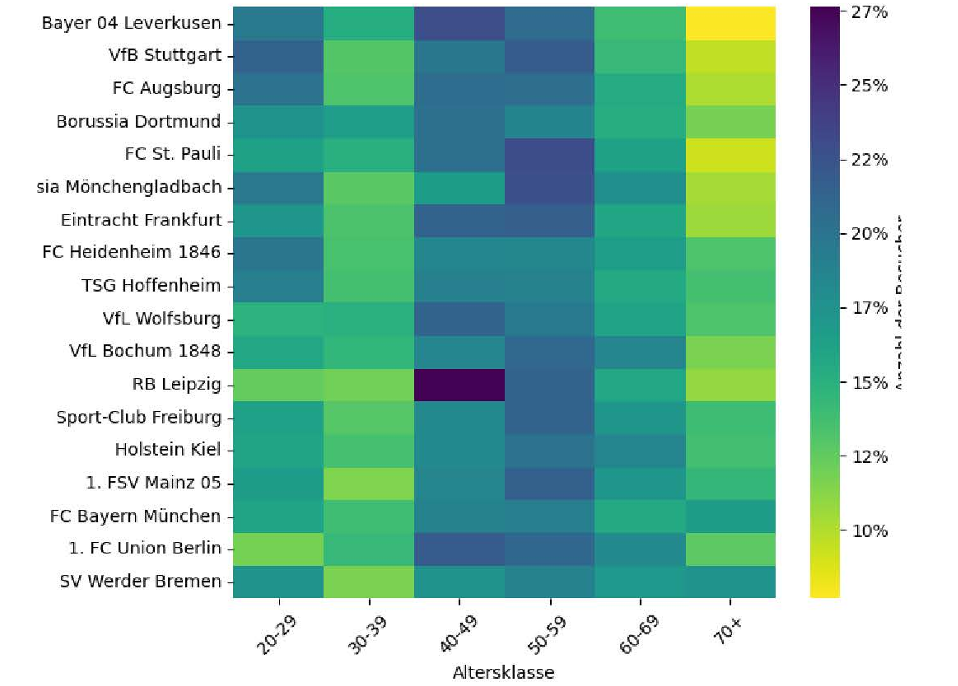
Who fills the stands? The data paints a clear picture: fans over 40 dominate. At Werder Bremen, the audience skews older; Bayer Leverkusen, surprisingly, draws a younger crowd.
And gender diversity is increasing as well—FC St. Pauli leads with 44% female fans, showing how modern fan culture evolves beyond traditional assumptions.
Crowd magnets: Where attendance peaks
Some teams draw bigger crowds than others. FC Bayern Munich tops the list, but cult club FC St. Pauli surprises by ranking second in away attendance. Motion Data also reveals cross-border fan flows—Dutch fans in Dortmund, Swiss supporters in Freiburg, and even Belgian visitors in Mönchengladbach. These insights help clubs and cities plan bilingual services, targeted ticketing, and tourism offers.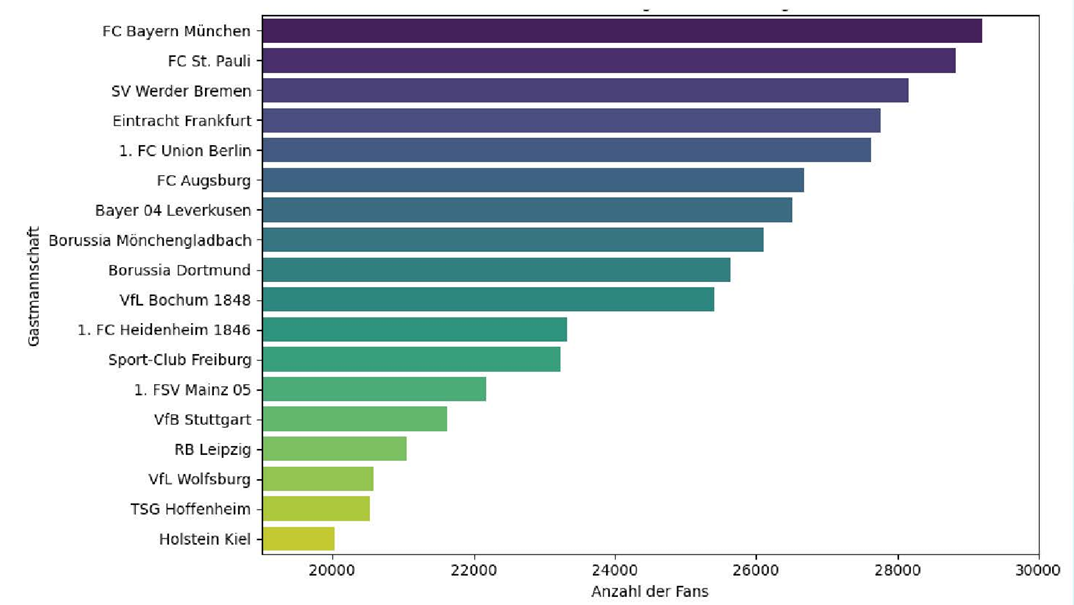
Why it matters
From mobility planning to marketing strategies, Motion Data transforms gut feelings into actionable insights. Clubs can optimize match scheduling, cities can prepare for traffic surges, and event managers can enhance safety and fan experience.
Better data means better planning.
Want to learn more? Read the full whitepaper here: https://www.t-systems.com/de/en/digital/gated-content/motion-data-insights
Explore Motion Data by T-Systems and unlock the full potential of fan analytics: https://dih.telekom.com/en/motion-data