Written under the auspices of the International Data Spaces Association by a select group of dataspace pioneers, standardization experts, and AI specialists, the “Data Spaces and AI” position paper draws on the same peer-to-peer governance logic that has already shaped international dataspace standardization, including ISO/IEC 20151, and extends it to the emerging world of agentic AI (Turkmayali 2026, see Figure 1).
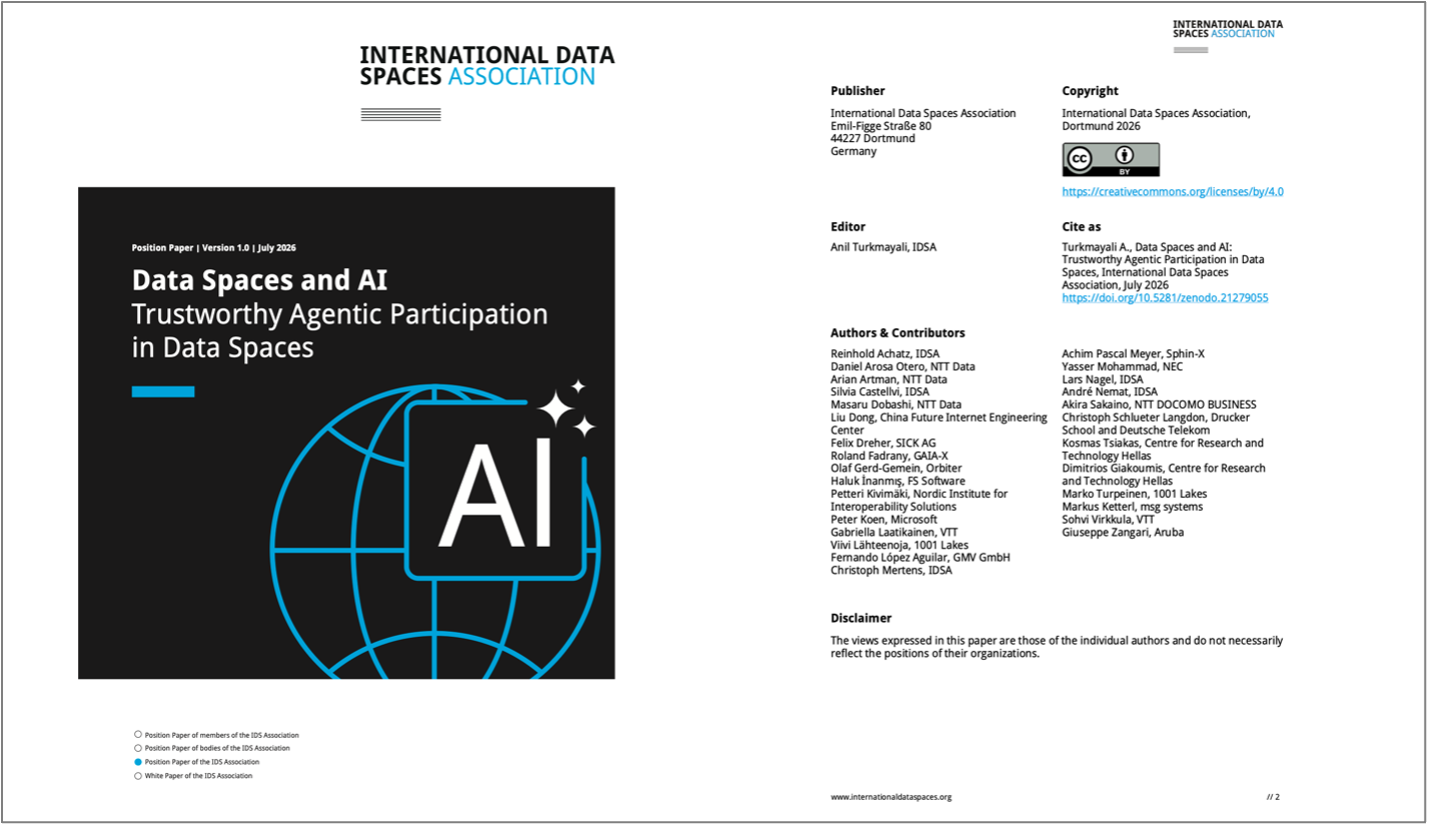
Figure 1: IDSA's "Data Spaces and AI" position paper
Dataspaces and AI
The IDSA Position Paper suggests that it may be helpful to reuse mechanisms established for resolving data coordination issues when designing agentic workflows. As AI moves toward agentic execution and chained interactions, the coordination problems begin to look structurally similar to those already addressed in cross-company data exchange: identity, trust, access control, governance, provenance, and controlled interoperability.
From that perspective, dataspace technology offers a promising template. The paper builds on the peer-to-peer mechanisms developed in the IDSA ecosystem for sovereign data sharing, an approach that has fed into international standardization efforts such as ISO/IEC 20151. It argues that these mechanisms may transfer naturally to agent-to-agent interaction, where autonomous systems also need a governed way to discover, negotiate, and act across organizational boundaries.
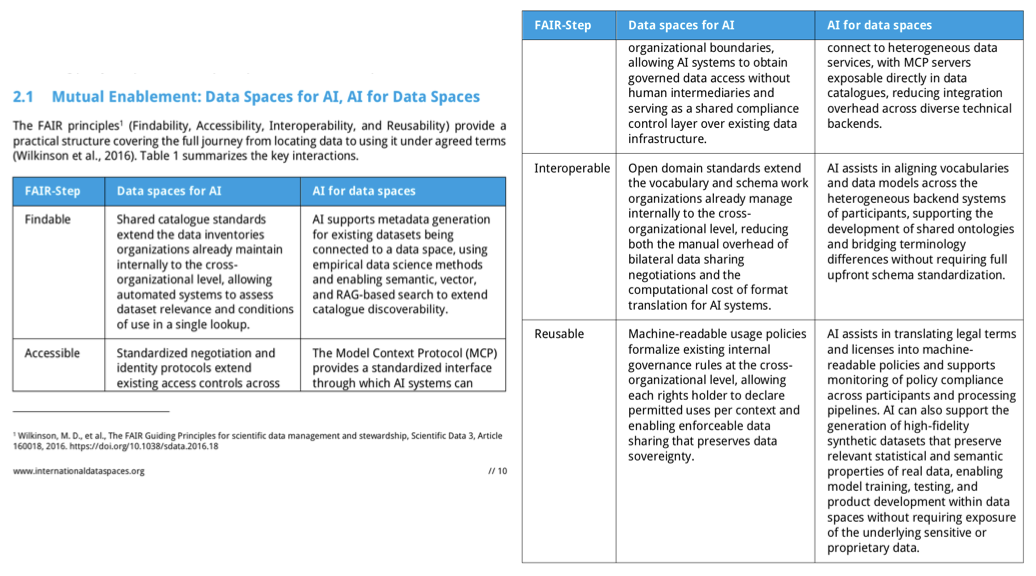
Figure 2: Dataspaces and AI through the FAIR lens (Turkmayali 2026, pp. 10-11)
More specifically, the following sections lay out options for reuse and explain how agentic AI and agent-hub orchestration can build on dataspace coordination and governance capabilities, accelerating adoption and avoiding reinvention:
- Chapter 2.3, pp. 17–19, on where dataspaces complement and improve the AI stack
- Table 1, pp. 10–11, on dataspaces for AI and AI for dataspaces (see Figure 2)
- Table 3, pp. 14–17, on how AI and dataspace concepts correspond
- Our TSI RoX case study on pp. 36–37
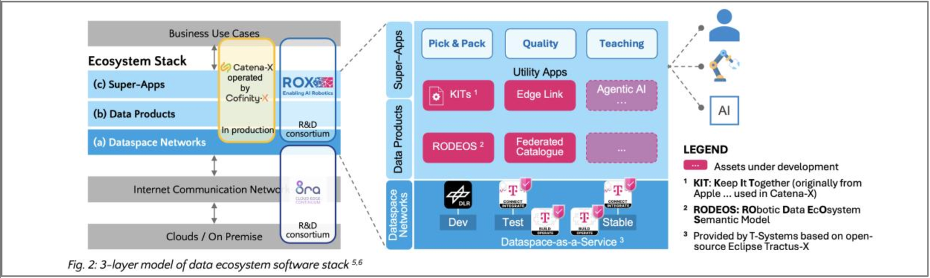
Figure 3: RoX data ecosystem stack and development (IDSA 2025, Fig. 4, p. 36)
Our case study: RoX – Physical AI with dataspaces
RoX (2024 to 2027) is a German consortium building a data ecosystem for AI-based robotics, supported by the Federal Ministry for Economic Affairs and Energy. It is a precompetitive initiative in which robotics companies and research institutes that otherwise compete, among them DFKI and DLR, collaborate on shared foundations, reusable building blocks and standards. The problem it addresses is specific. AI can make robots more flexible, easier to deploy and more productive across manufacturing, logistics and services, but AI-based robotics depends on trusted access to machine, product, process, quality and supplychain data that is scattered across companies, systems and lifecycle stages. RoX uses dataspace technology as the foundation for secure, governed and sovereign exchange of that data (Guggenberger et al. 2025).
The operational infrastructure, provided by T-Systems, is a dataspace built on the open-source Tractus-X core and aligned with IDSA and Gaia-X. It runs in two environments, one for development, integration and testing and one as a stable environment for reliable consortium operation, which keeps experimentation separate from the demonstrators that have to keep working. On this foundation the consortium has shown live robotic cells for dynamic pick-and-place, quality inspection and teach-and-assemble, a first data-ecosystem application that visualizes data flows across participants, and federated catalogue capabilities that let applications discover and consume data from across the ecosystem rather than from a single source. A simulation application for pick-and-pack draws on live data assets delivered through the dataspace set up to help close the sim-to-real gap, a concrete case of physical AI built on governed data. Figure 3 shows the system stack and the elements still under development.
The outlook for RoX is agentic. The same governed data supply that feeds the robotic applications is intended to feed an agentic layer that automates and orchestrates tasks and connects agents to business processes under the dataspace’s existing controls. RoX is one of the clearer demonstrations of the argument this paper makes: a dataspace turns distributed industrial data into governed data supply for AI, and trusted, sovereign and interoperable data sharing is already becoming a practical foundation for AI at scale.
RoX site and events
- Official RoX Website: https://www.project-rox.ai/en/
- Offical RoX Linkedin: https://bit.ly/RoX_on_LinkedIn
- T-Systems in RoX: LinkedIn
- 2024: Launch by Federal Minister in Berlin & kickoff at Duerr: LaunchKickoff2024, LinkedIn
- 2025, April: Hannover Fair: Panel of German government’s Industrie 4.0 stage: Report, LinkedIn
- 2025, June: Automatica, panel at opening day: Report, LinkedIn
- 2026 March 30, Kyoto University KUPAC Webinar on RoX: Report
- 2026 April 1, RRI Webinar: https://www.jmfrri.gr.jp/event/seminar/4519_3.html
- 2026, April: Hannover Fair, roundtable and 3 live robot cells: Report, LinkedIn
References
Guggenberger, T. M., C. Schlueter Langdon, and B. Otto. 2025. Data spaces as meta-organisations. European Journal of Information Systems, 34(5): 822-842, https://doi.org/10.1080/0960085X.2025.2451250
Turkmayali, A. 2026. Data Spaces and AI: Trustworthy Agentic Participation in Data Spaces. Position Paper (July), International Data Spaces Association, Dortmund, https://doi.org/10.5281/zenodo.21279055